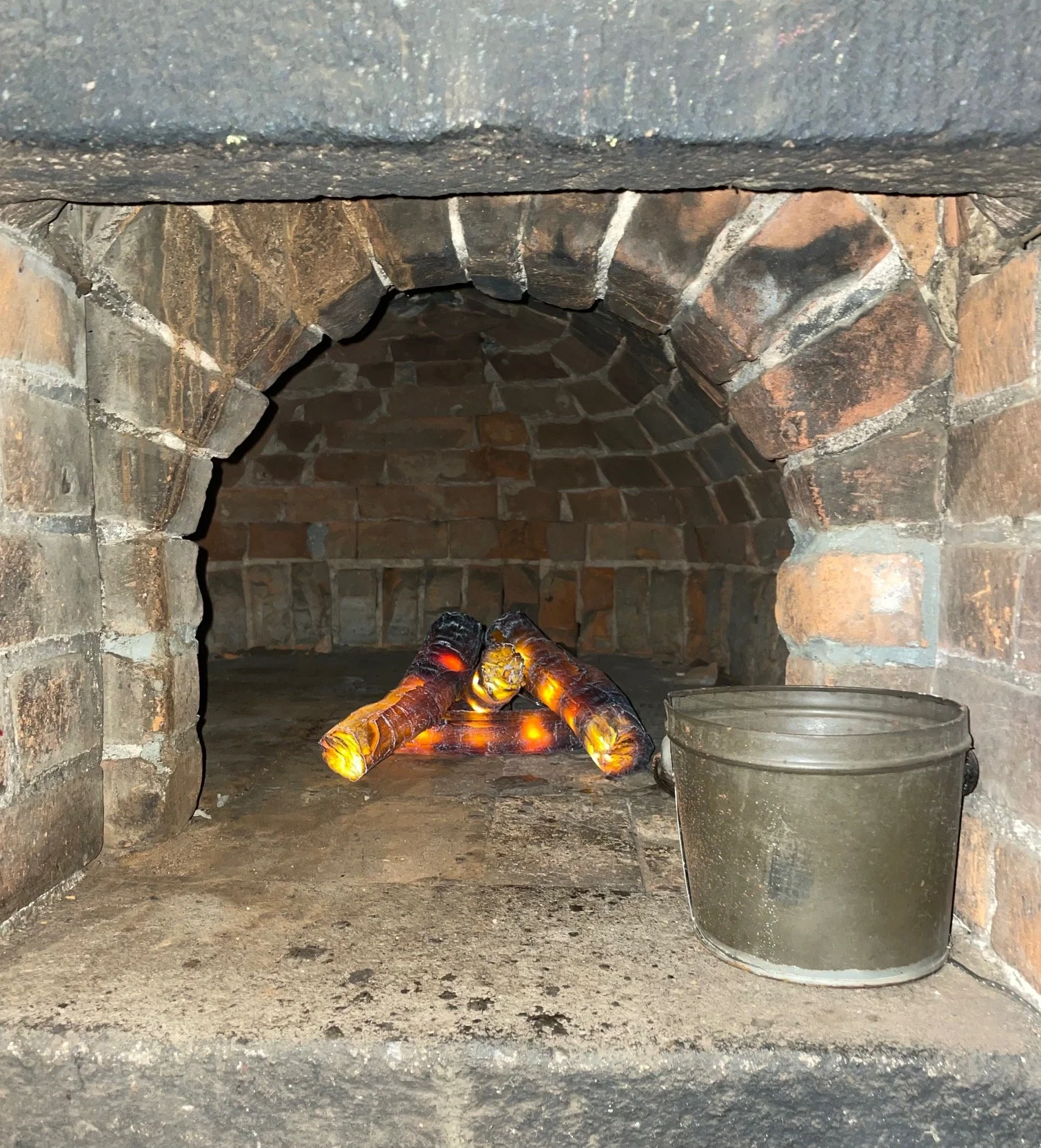
Beehive Oven at the Hitchcock-Phillips House
A beehive oven is a dome-shaped structure, named for its resemblance to an old-fashioned beehive, and has been in use since the Middle Ages. These ovens reached peak popularity in Europe and the Americas before declining during the Industrial Revolution (1760-1840), when gas and electric ovens became common. In households, they were used for baking cakes, pies, and meats. In industry, they served purposes such as firing tiles and converting coal into coke - a carbon-rich fuel used in steel making, produced by heating coal without oxygen to remove impurities. Typically made out of fire brick, these ovens measure about 4 meters wide and 2.5 meters high, featuring a top-loading hole and a discharge near the base. They were often built in rows, called batteries, sharing walls for efficiency. In colonial and early American Connecticut homes, beehive ovens were often built into the kitchen hearth - the center of domestic activity, and they are pivotal in terms of New England architectural traditions and history, as they were found in many historic homes dating back to the 1700s and the early 1800s.